Galapagos Islands
May 16-23
We spent a week exploring the Galápagos Islands with 16 close friends aboard the Tip Top IV, and it was truly one of the most unforgettable trips of our lives.
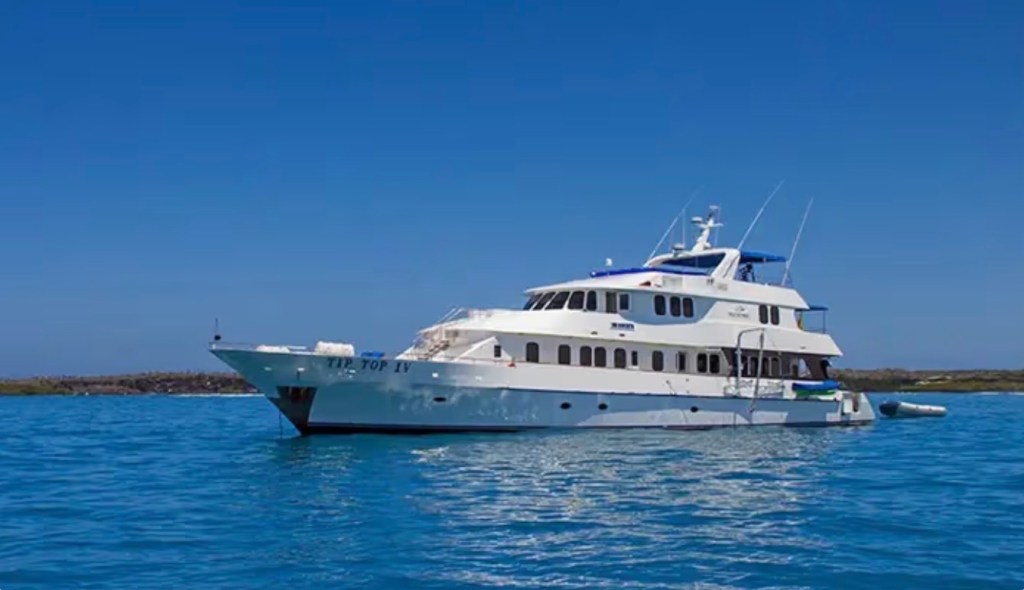
From the moment we boarded, life on the boat was incredibly comfortable. The Tip Top IV has 10 guest cabins, each with a private bathroom, and the crew took care of everything seamlessly. The food was delicious, and the atmosphere onboard felt easy and relaxed. Our naturalist guide, Lulu, was exceptional — deeply knowledgeable, endlessly patient, and somehow able to keep a lively group of 16 friends organized and on track throughout the week.
The Galápagos itself is one of the most tightly protected places we’ve ever visited. Only a limited number of boats are allowed to visit each island per day, and every vessel must travel with a certified naturalist guide. That structure made every landing feel intentional and special, like we were being granted access to something truly rare.
We were lucky with the weather all week — warm, sunny days around 25–28°C, and water that hovered around 22°C. Perfect conditions for both hiking and snorkeling.
Across the islands, we encountered an astonishing range of wildlife, including:
Blue-footed boobies, frigatebirds, waved albatrosses, flamingos, marine iguanas, giant tortoises, sea lions, penguins, sharks, rays, eels, sea turtles, and endless schools of brightly colored fish.
Most days followed a rhythm that quickly became second nature: hike an island in the morning, return to the boat for lunch, snorkel in the afternoon, then boat overnight to the next destination.
⸻
North Seymour Island
Our flight from Quito landed at the Baltra Island airport. We boarded the Tip Top IV around 12pm and headed to North Seymour Island. It was the perfect introduction to the area’s wildlife.
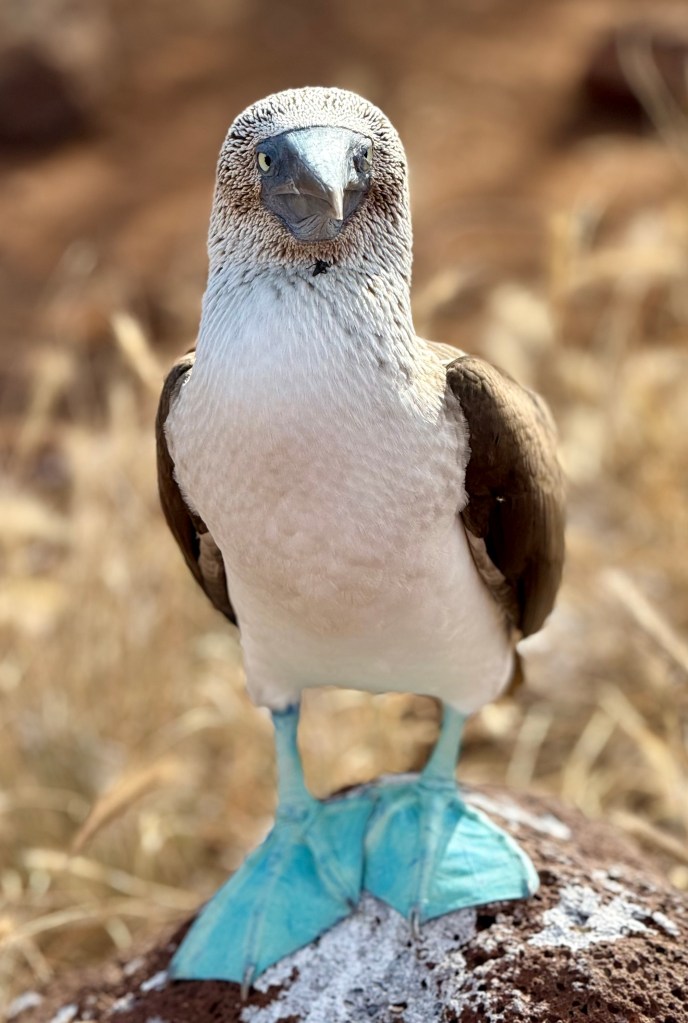
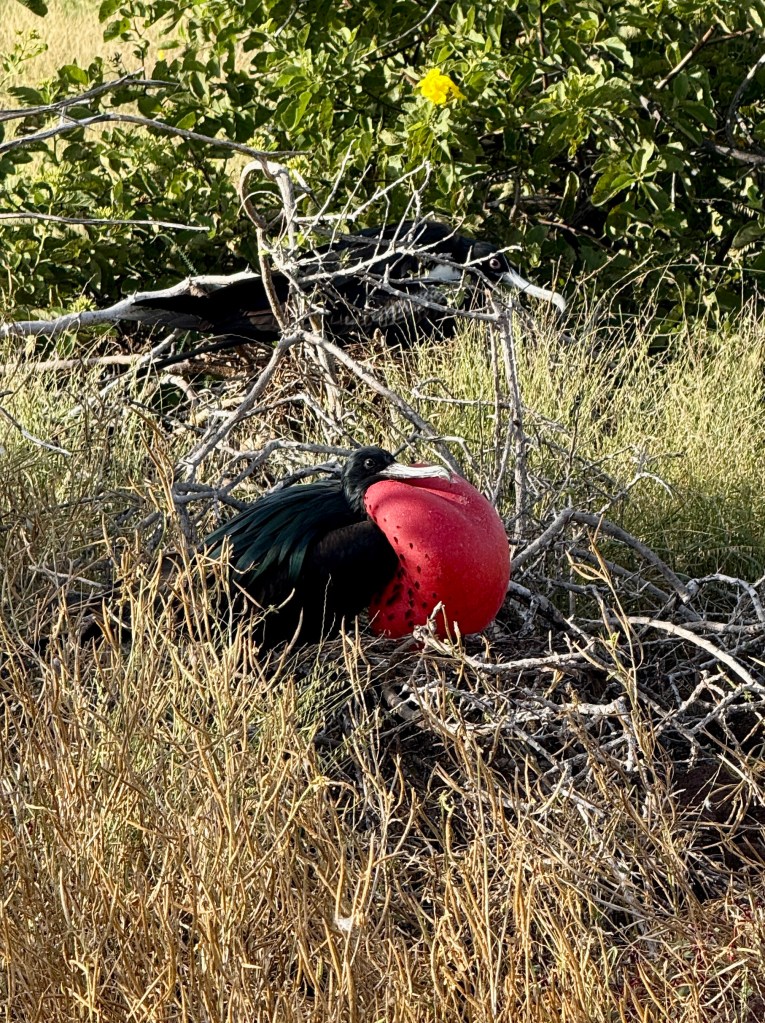
The island is famous for its massive colonies of blue-footed boobies and magnificent frigatebirds. During mating season, the frigatebirds inflate their brilliant red throat pouches while the boobies perform their quirky, high-stepping courtship dance just meters from the trail. What struck us most was how close we could get — at times, we had to carefully walk around birds who simply refused to move.
It felt like stepping straight into a wildlife documentary.
⸻
Española Island
The next day was Española Island, which brought both hiking and our first real snorkeling experience — and it set the bar incredibly high.
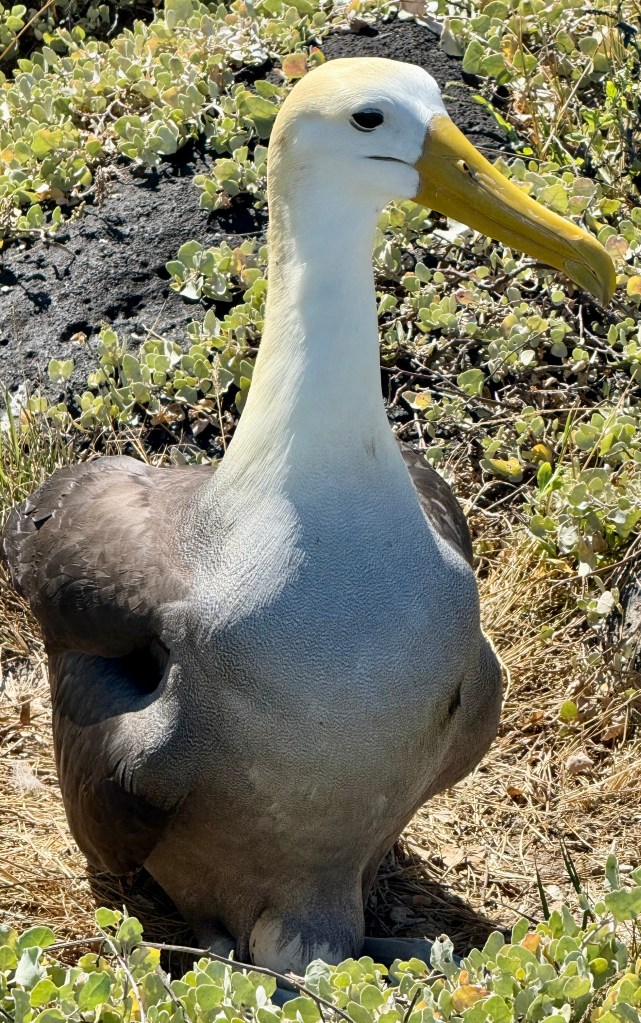
Española is famous for its waved albatrosses, which breed almost exclusively here. Watching their elaborate courtship rituals and seeing these massive birds launch themselves off seaside cliffs was unforgettable. We also saw blue-footed boobies, marine iguanas, and sea lions scattered across the shoreline.
That afternoon’s snorkeling completely blew us away — crystal-clear water, abundant marine life, and an immediate sense that we were entering an entirely different world beneath the surface.
⸻
San Cristóbal Island
The next morning, we landed by zodiac on San Cristobal Island and hiked uphill to sweeping 360-degree views of volcanic coastline and open ocean.
The landscape felt raw and dramatic — windswept cliffs, and volcanic rock in shades of red, orange, and black. This island is one of the only places in the Galápagos where all three booby species nest together: blue-footed, red-footed, and Nazca boobies. Frigatebirds circled constantly overhead, filling the sky with motion.
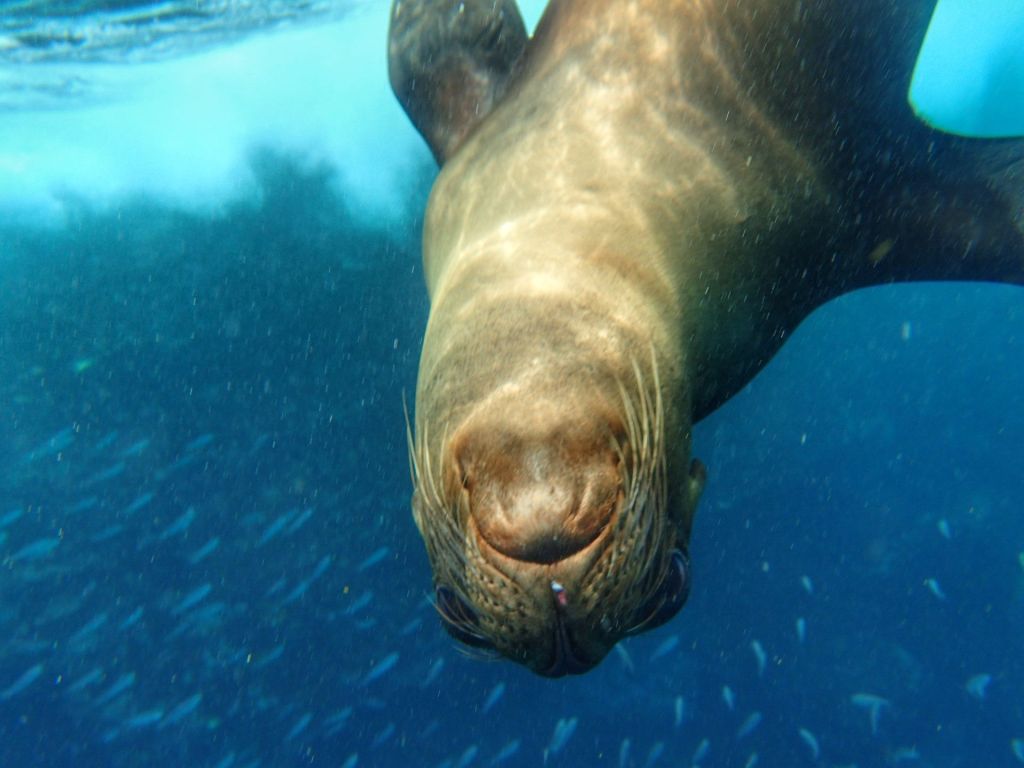
That afternoon’s snorkeling was one of the highlights of the entire trip. The sea lions were unbelievably playful — curious, graceful, and completely unbothered by our presence. One in particular repeatedly imitated me underwater, flipping whenever I did. It felt like an underwater game with a very enthusiastic partner. Talk about a once in a lifetime experience!
⸻
Santa Cruz Island
Santa Cruz Island offered a change of pace — more populated, greener, and with a strong sense of everyday island life.
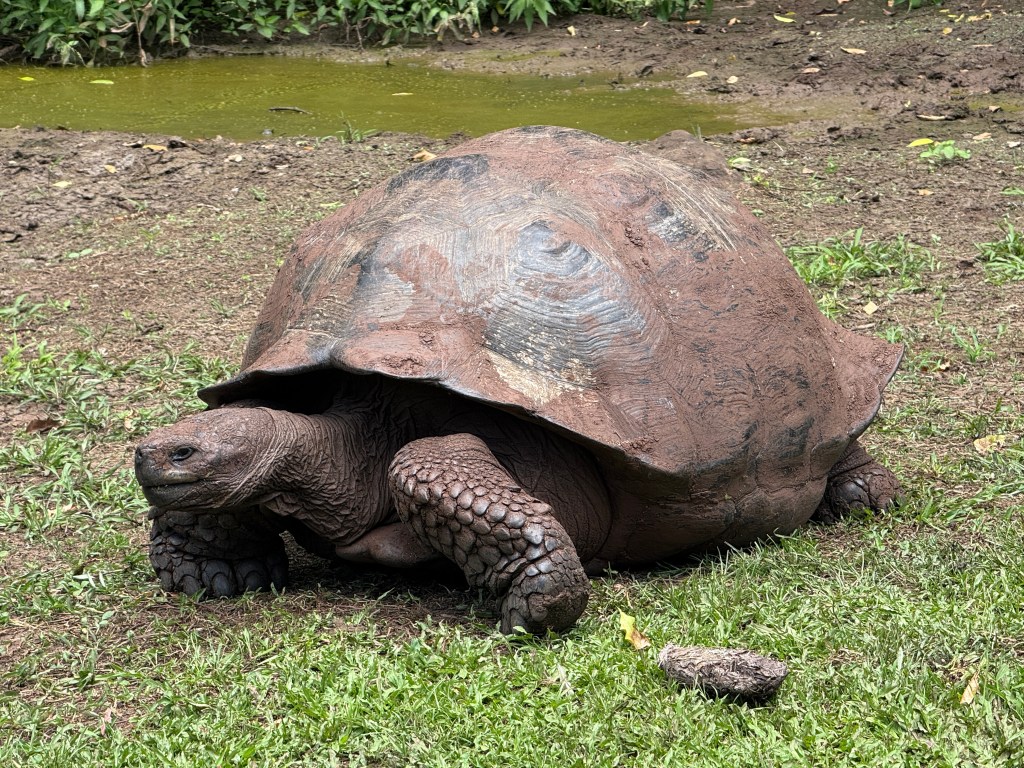
We visited the Charles Darwin Research Station and learned about ongoing conservation work, then explored Los Gemelos sinkholes before walking through a lava tube and into the lush highlands. There, we found giant tortoises roaming freely through green fields — a surreal contrast to the volcanic coastlines we’d seen earlier.
One unexpected highlight was visiting Lulu’s cacao farm, where we tasted her “Dark Shark” chocolate and couldn’t resist bringing some back with us.
We ended the day wandering through the island’s main town before returning to the boat.
⸻
Santa Fe Island
Santa Fe Island delivered yet more memorable wildlife encounters.
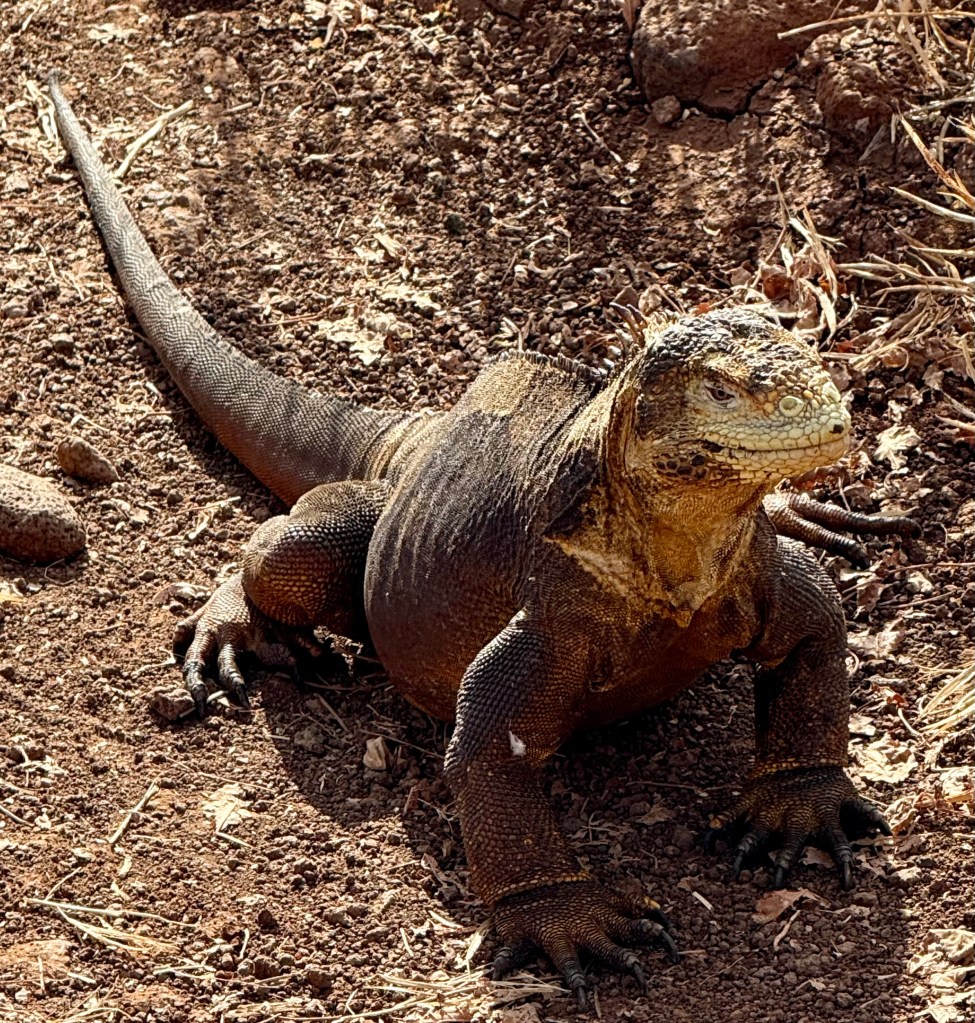
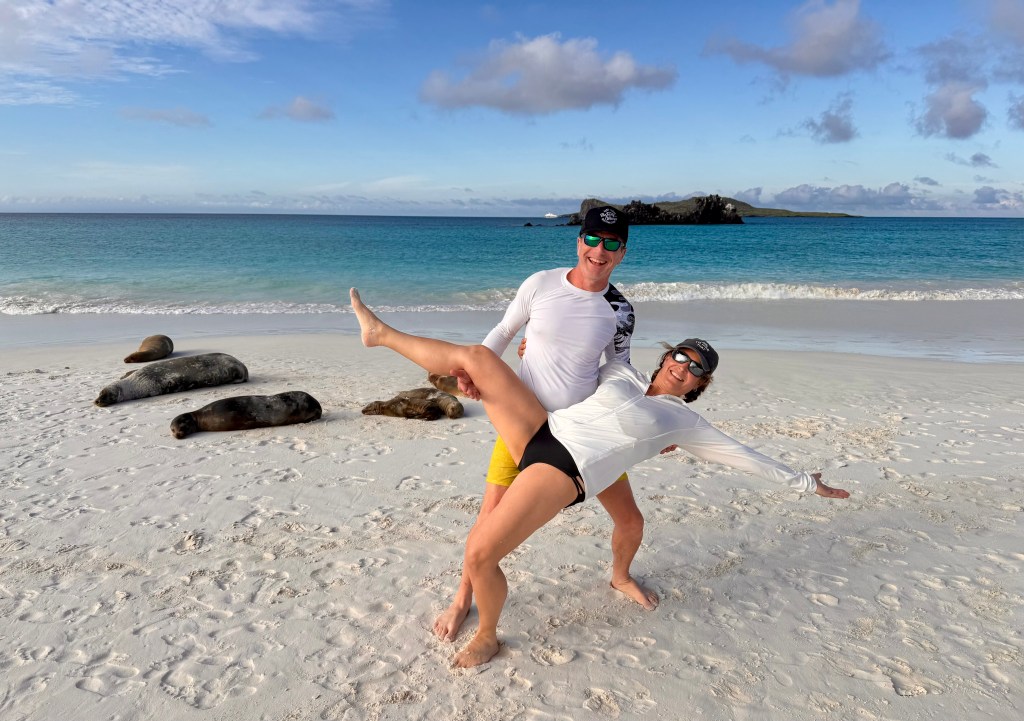
We landed on a beach completely covered in sea lions before hiking through cactus forests and volcanic terrain dotted with Santa Fe land iguanas.
The most unforgettable moment came courtesy of a very curious sea lion who took a particular interest in Dan — prompting equal parts shock and uncontrollable laughter as Lulu calmly advised him to stay still while the sea lion investigated him by sticking her nose up his shorts as the other 15 of us took hundreds of photos and videos to share with Dan that night.
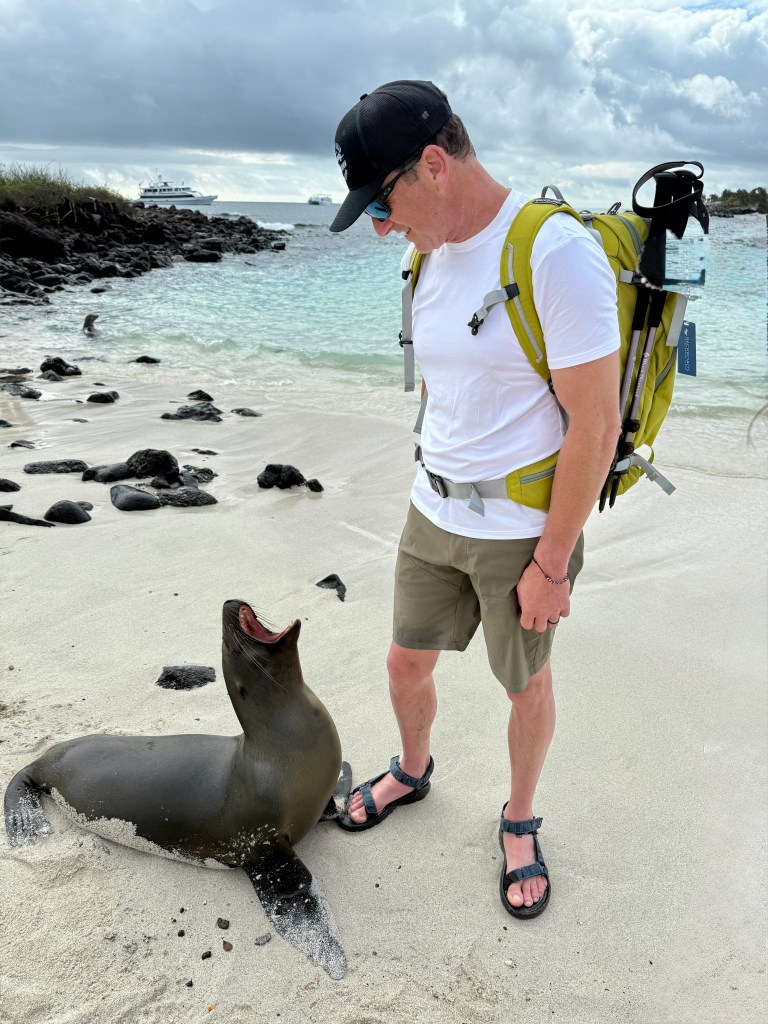
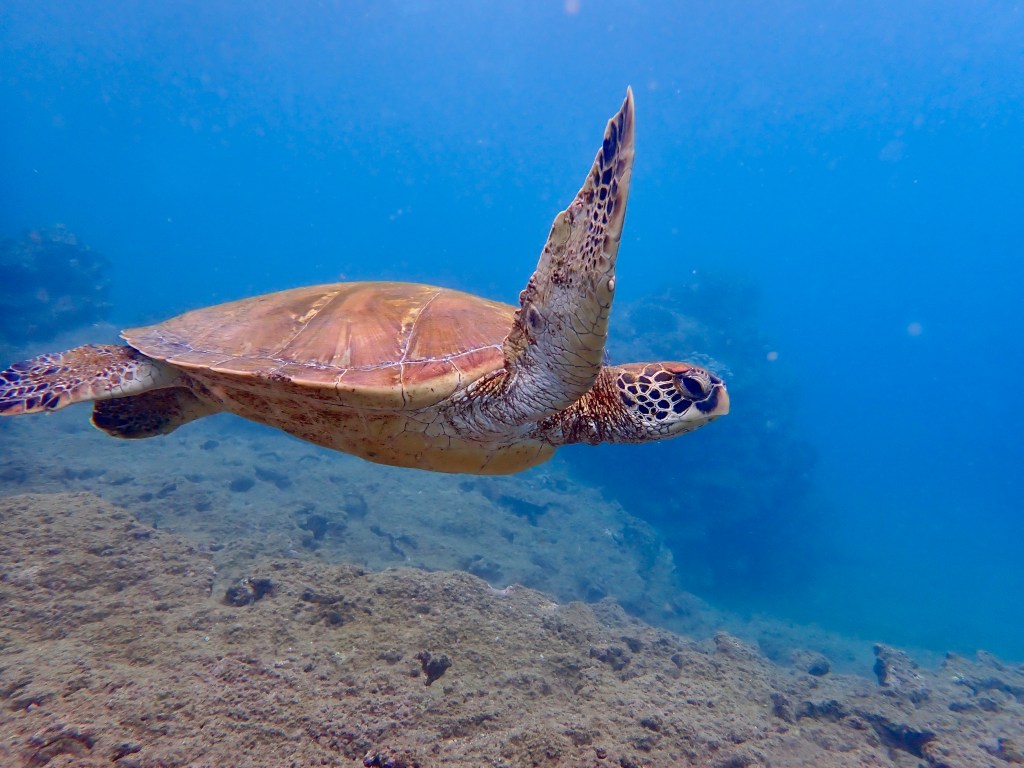
That afternoon’s snorkeling adventure was swimming with hundreds of giant sea turtles. After snorkeling, we kayaked before continuing on to South Plaza Island.
South Plaza Island was small but overflowing with life — we walked through red and black volcanic landscapes, towering cacti, and wildlife at every turn.
⸻
Bartolomé Island
Bartolomé Island felt almost lunar — a stark volcanic landscape rising out of the sea.
The highlight was the climb up the 397 steps to the famous viewpoint over Pinnacle Rock. Always competitive, our group raced to the top in under 10 minutes, turning what was meant to be a 30–45 minute climb into a competitive challenge for bragging rights.
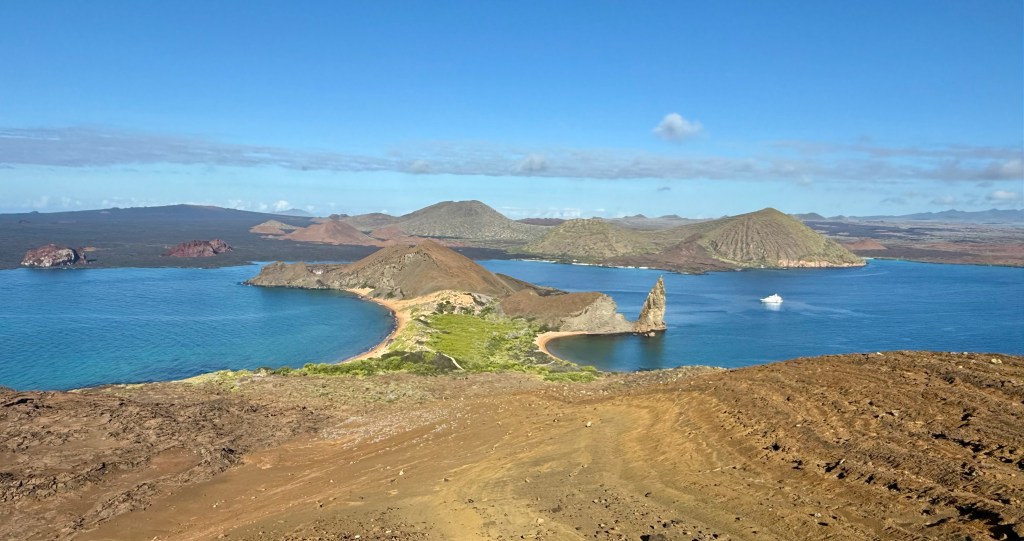
Afterwards, we snorkeled in one of the most incredible marine environments of the trip — including swimming alongside Galápagos penguins, which darted through the water like underwater rockets.
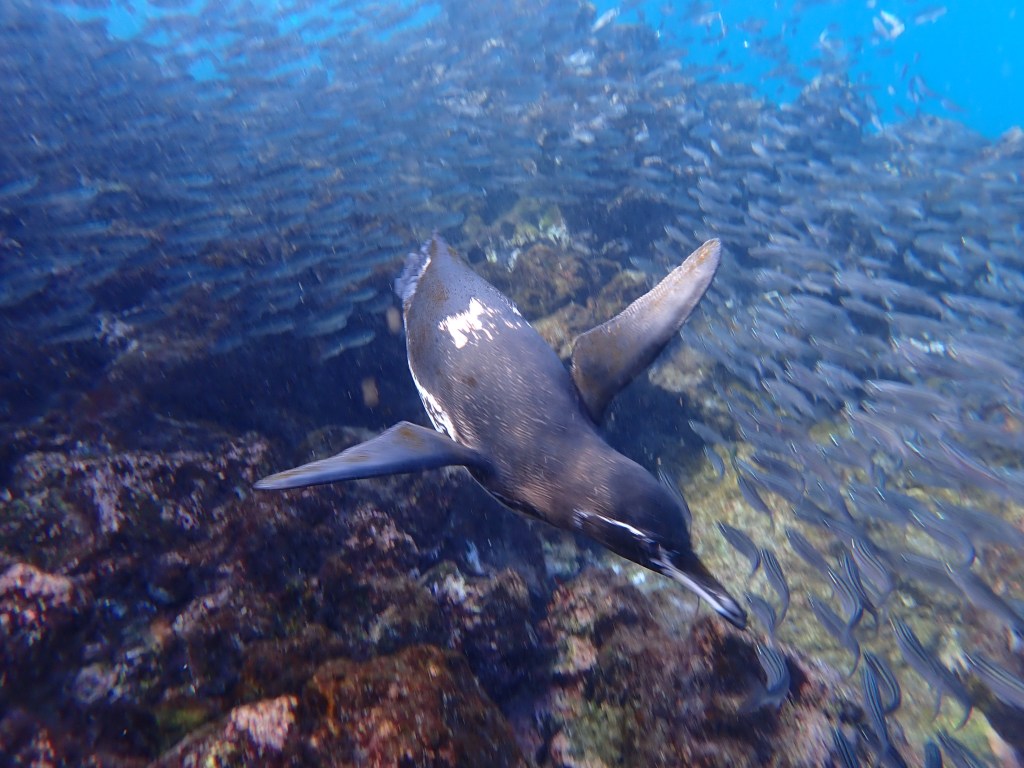
That combination of dramatic landscapes and rich marine life made Bartolomé unforgettable.
⸻
Santiago Island
Santiago Island felt like walking across a freshly formed planet.
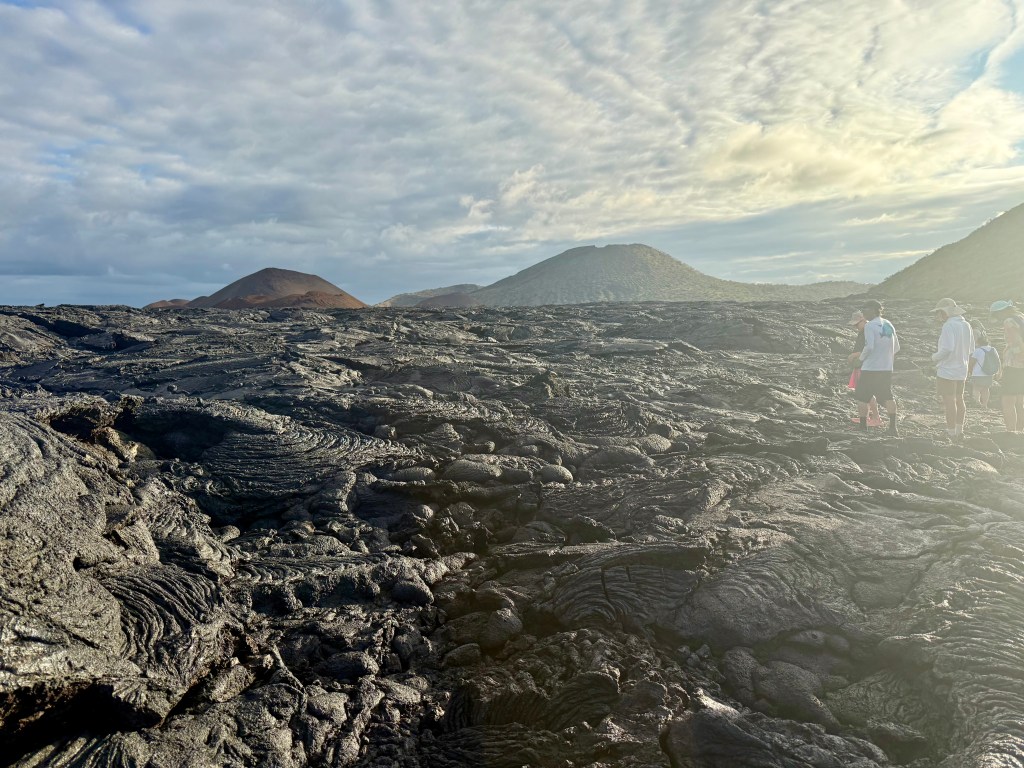
We hiked over vast, frozen lava flows — smooth, rope-like formations and cracked volcanic plates stretching to the ocean. Snorkeling just offshore continued that same experience underwater, where submerged lava ridges created a surreal volcanic seascape beneath clear blue water.
It was less about wildlife and more about geology — raw, quiet, and otherworldly.
⸻
Rábida Island
Rábida Island stood out immediately with its deep red sand beach and striking volcanic cliffs.
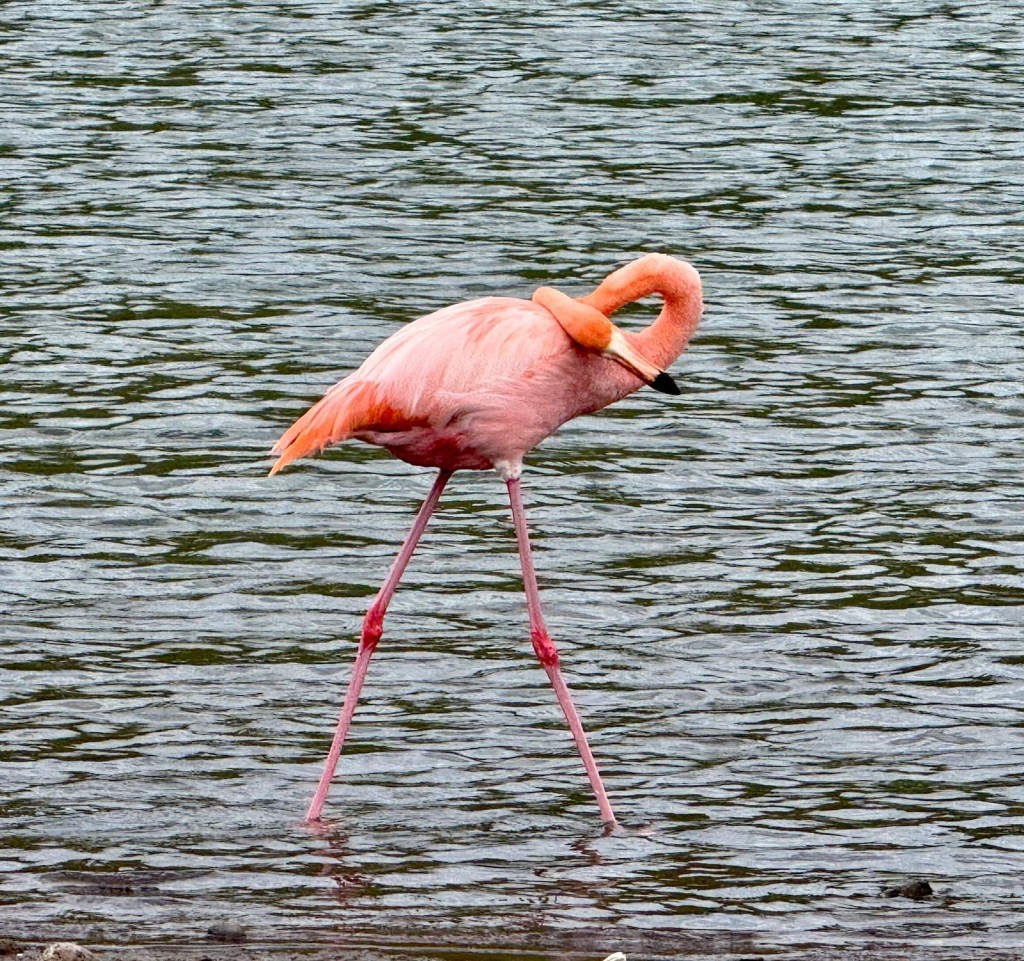
Perhaps the biggest surprise was finding a lagoon behind the beach filled with bright pink flamingos — an unexpected and beautiful contrast to the rugged coastline.
Snorkeling here was equally memorable, with sea lions weaving through the water and marine life moving through rocky volcanic formations just offshore.
⸻
Sombrero Chino Island
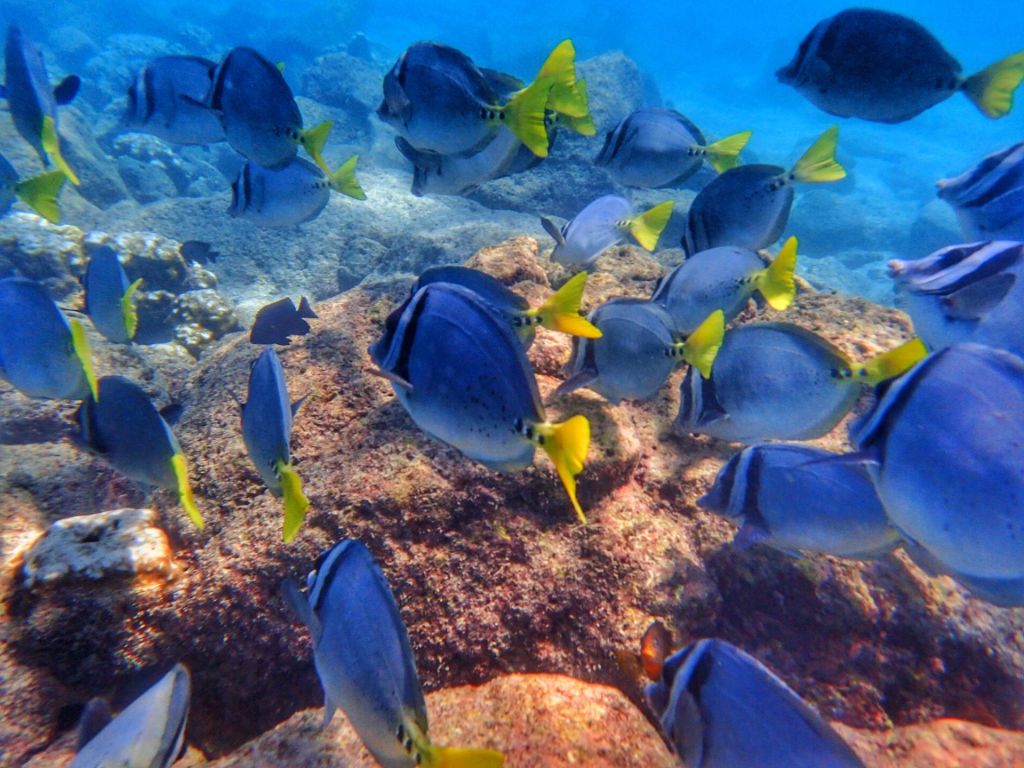
Sombrero Chino Island was a perfect final snorkeling stop — calm, clear, and full of life.
Sea lions were the stars once again, circling us playfully as we floated over volcanic rock formations beneath the surface. Penguins zipped past us underwater, and marine iguanas looked almost comical as they awkwardly swam through the water.
It was the perfect blend of fun, wildlife, and surreal underwater scenery.
⸻
Final Thoughts
We returned to Baltra Island and flew back to Quito with tired bodies and full hearts.
It’s hard to put into words just how special this trip was — not just because of the wildlife or landscapes, but because of the shared experience. Chartering a boat with close friends made everything more personal, more fun, and more unforgettable.
Without question, one of the best trips of our lives.